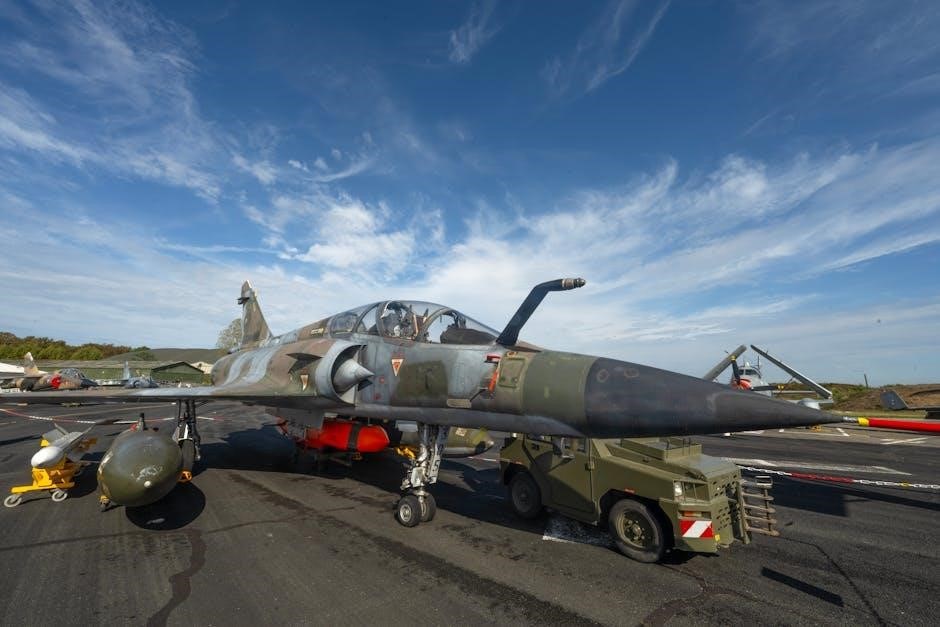
Modern fighter weaponry signifies the latest advancements, equipping aircraft to dominate airspace and tackle complex threats with precision and reliability.
Defining “Modern” in Military Technology
In military contexts, “modern” transcends simply being new; it embodies a shift towards incorporating the latest ideas and equipment. This definition isn’t static, evolving alongside technological leaps. A modern army, for instance, isn’t just equipped with recent hardware, but utilizes systems reflecting current strategic thinking.
Currently, as of early 2026, “modern” signifies integration of AI-guided systems, directed energy weapons like lasers, advanced electronic warfare capabilities, and even hypersonic technologies. It’s about contemporary design, contrasting with past eras, and prioritizing up-to-date effectiveness. The term implies a focus on present and recent times, moving beyond obsolete methods.
Essentially, modern military technology aims for superior performance within the current age, emphasizing innovation and adaptability to evolving threats.
The Evolution of Fighter Weaponry
Fighter weaponry has dramatically evolved from early aerial combat focused on machine guns and rudimentary rockets. Post-World War II, the introduction of air-to-air missiles marked a significant leap, initially offering increased range but lacking precision. Subsequent generations saw improvements in missile guidance and the development of precision-guided munitions (PGMs) for air-to-ground roles.
The late 20th and early 21st centuries witnessed a surge in smart munitions, networked warfare capabilities, and electronic warfare systems. Today, the focus is shifting towards directed energy weapons, hypersonic missiles, and increasingly, artificial intelligence integration. This progression reflects a constant drive for greater range, accuracy, and survivability.
Modern fighters aim to secure airspace and fulfill complex missions, demanding adaptable and highly reliable armaments.

Air-to-Air Missiles
Air-to-air missiles are crucial for fighter combat, evolving from short-range to beyond-visual-range capabilities with advanced guidance systems for aerial dominance.
Beyond Visual Range (BVR) Missiles
Beyond Visual Range (BVR) missiles represent a paradigm shift in aerial warfare, allowing fighters to engage targets at distances exceeding visual acquisition. These sophisticated weapons rely heavily on radar and data link technology for guidance, enabling pilots to launch and potentially lock-on after launch. Modern BVR missiles, like the AIM-120 AMRAAM, incorporate active radar homing, inertial guidance, and mid-course corrections via data links from the launching aircraft or external sources.
The effectiveness of BVR engagements hinges on robust sensor suites, secure data links, and electronic warfare capabilities to counter enemy jamming and deception. Advancements focus on increasing range, improving resistance to countermeasures, and enhancing target discrimination to minimize the risk of friendly fire. BVR capability dramatically expands a fighter’s offensive envelope, providing a significant tactical advantage.

Short-Range Air-to-Air Missiles (WVR)
While Beyond Visual Range (BVR) missiles extend engagement distances, Short-Range Air-to-Air Missiles (WVR), often referred to as dogfight missiles, remain crucial for close-in combat. These highly maneuverable weapons prioritize speed and agility, designed for engagements within visual range where pilot skill and missile responsiveness are paramount. The AIM-9 Sidewinder is a prime example, continually updated with improved seekers and countermeasures resistance.
Modern WVR missiles employ advanced infrared (IR) seekers, capable of locking onto the heat signature of an enemy aircraft. Helmet-mounted displays (HMDs) allow pilots to cue the missile onto targets simply by looking at them, enhancing situational awareness and reaction time. Continued development focuses on improving IR counter-countermeasures (IRCCM) and increasing off-boresight targeting capabilities for enhanced lethality in dynamic close-range scenarios.
Advanced Missile Guidance Systems
Modern air-to-air and air-to-ground missiles leverage sophisticated guidance systems for increased accuracy and effectiveness. Inertial Navigation Systems (INS) provide initial guidance, supplemented by Global Positioning System (GPS) for precise positioning. However, reliance on GPS is vulnerable to jamming, prompting the development of anti-jamming techniques and alternative navigation methods.
Imaging Infrared (IIR) seekers lock onto the thermal image of a target, offering resilience against countermeasures. Radar guidance, including active radar homing, allows missiles to independently track and engage targets. Data-linking capabilities enable missiles to share information with the launching aircraft and other platforms, improving situational awareness and target discrimination. Furthermore, advancements in artificial intelligence are paving the way for autonomous target recognition and engagement, enhancing missile performance in complex environments.

Air-to-Ground Munitions
Modern fighters employ precision-guided munitions, including guided bombs and air-to-surface missiles, delivering devastating firepower against ground targets with accuracy.
Precision-Guided Munitions (PGMs)
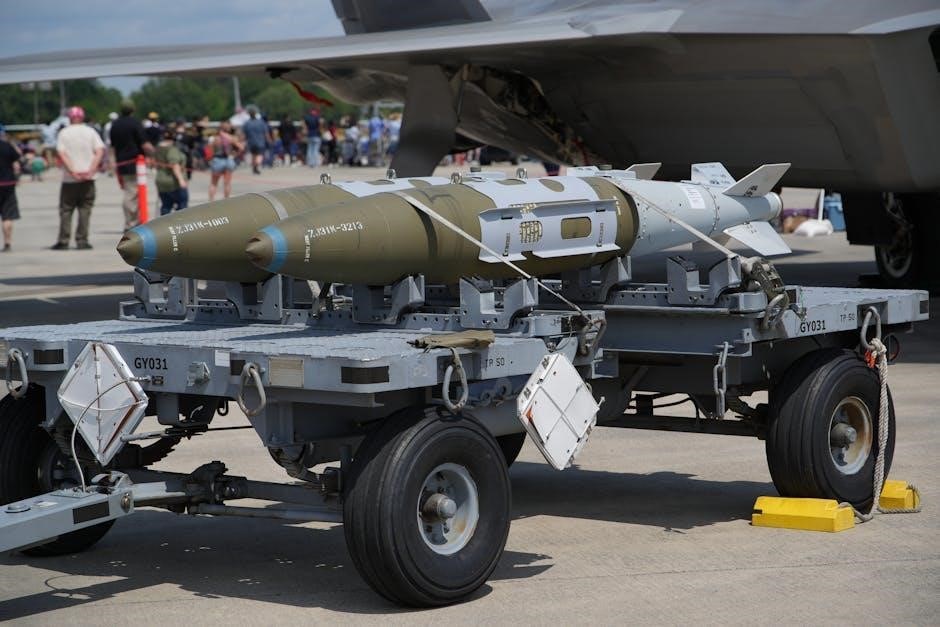
Precision-Guided Munitions (PGMs) represent a cornerstone of modern air-to-ground warfare, dramatically increasing the effectiveness of fighter aircraft. These “smart” weapons utilize various guidance systems – GPS, laser, or infrared – to accurately strike designated targets, minimizing collateral damage and maximizing mission success. PGMs offer a significant advantage over unguided bombs, enabling engagement of targets in adverse weather or challenging terrain.
The development of PGMs has been driven by the need for highly reliable and precise tactical weapons. Modern PGMs encompass a wide range of munitions, from guided bombs to sophisticated air-to-surface missiles, each designed for specific operational requirements. Their integration into fighter aircraft capabilities allows for a more nuanced and effective application of force, crucial in contemporary conflict scenarios.
Guided Bombs – JDAM and Alternatives
The Joint Direct Attack Munition (JDAM) stands as a prime example of guided bomb technology, transforming unguided “dumb” bombs into precision weapons. Utilizing a GPS-aided guidance system, JDAM allows for all-weather, day/night accuracy, significantly enhancing strike capabilities. However, alternatives to JDAM have emerged, offering unique advantages. Laser-guided bombs, for instance, provide exceptional accuracy in clear weather, relying on a designated laser spot to pinpoint the target.
Other options include electro-optical guidance systems, offering visual targeting capabilities. The choice of guided bomb depends on the specific mission parameters, target characteristics, and environmental conditions. These advancements in guided bomb technology represent a crucial component of modern fighter armaments, delivering increased precision and effectiveness.
Air-to-Surface Missiles
Air-to-surface missiles (ASMs) represent a critical offensive capability for modern fighter aircraft, enabling strikes against ground and naval targets at extended ranges. These missiles vary significantly in range, guidance systems, and warhead types, catering to diverse mission requirements. Modern ASMs often employ a combination of guidance methods, including GPS, inertial navigation, and imaging infrared (IIR) seekers, ensuring high accuracy even in contested environments.
Examples include cruise missiles like the AGM-88 HARM, designed to suppress enemy air defenses, and anti-ship missiles such as the AGM-84 Harpoon. Advancements focus on increasing range, improving stealth characteristics, and enhancing resistance to countermeasures, solidifying their role in modern warfare.
Directed Energy Weapons
Emerging directed energy weapons, like lasers and high-power microwaves, promise revolutionary capabilities for fighter aircraft, offering speed-of-light engagement options.
Laser Weapons for Fighters
The integration of laser weapons onto fighter platforms represents a paradigm shift in aerial combat. These systems, utilizing directed energy, offer several advantages over traditional kinetic weapons. Primarily, lasers provide near-light-speed engagement, drastically reducing reaction times against incoming threats. Furthermore, they offer a potentially unlimited magazine depth, constrained only by available power.
However, significant challenges remain. Power generation and thermal management are critical hurdles, requiring substantial advancements in onboard energy storage and dissipation technologies. Atmospheric conditions, such as fog or dust, can also impede laser effectiveness. Despite these obstacles, ongoing research and development are steadily improving laser weapon capabilities, paving the way for their eventual deployment on future fighter aircraft, offering a decisive tactical edge.
High-Power Microwave (HPM) Weapons
High-Power Microwave (HPM) weapons represent a non-kinetic engagement capability for modern fighters, disrupting electronic systems rather than causing physical destruction. These systems emit intense bursts of microwave energy, potentially disabling an adversary’s radar, communications, and even flight control systems. HPM weapons offer a scalable effect, ranging from temporary disruption to permanent damage, providing a flexible engagement option.
However, HPM deployment faces challenges. Precise targeting and beam focusing are crucial, as is mitigating collateral damage to friendly electronics. Atmospheric absorption and scattering can also reduce weapon effectiveness. Despite these hurdles, HPM technology is maturing, offering a potentially game-changing capability for neutralizing enemy assets without resorting to destructive force, aligning with evolving rules of engagement.
Electronic Warfare Systems
Modern fighters employ sophisticated electronic warfare pods for jamming and counter-jamming, enhancing survivability and disrupting enemy capabilities in contested airspace.
Advanced Electronic Warfare Pods
Contemporary fighter aircraft increasingly rely on highly advanced Electronic Warfare (EW) pods to gain a significant tactical advantage. These pods represent a leap forward in defensive and offensive capabilities, moving beyond simple jamming to encompass a broader spectrum of electronic countermeasures. Modern EW pods are capable of detecting, identifying, and analyzing enemy radar signals with exceptional precision.
This allows for the implementation of tailored jamming techniques, effectively disrupting enemy targeting and communication systems. Furthermore, these pods often incorporate self-protection features, safeguarding the host aircraft from incoming missile threats. The integration of digital signal processing and adaptive algorithms enables these systems to continuously learn and evolve, countering emerging threats in real-time. They are crucial for ensuring mission success in heavily contested electromagnetic environments.
Jamming and Counter-Jamming Techniques
Modern electronic warfare revolves around a constant cycle of jamming and counter-jamming. Jamming techniques aim to disrupt enemy radar and communication systems, employing methods like noise jamming, deceptive jamming, and barrage jamming to overwhelm or mislead opponents. However, adversaries continually develop counter-jamming techniques to mitigate these effects.
These include frequency hopping, polarization control, and the use of advanced signal processing to filter out jamming signals. Adaptive jamming, where the jamming signal dynamically adjusts to counter enemy countermeasures, is a key advancement. Furthermore, digital radio frequency memory (DRFM) technology allows for the creation of highly realistic deceptive jamming signals. The effectiveness of these techniques depends on factors like signal power, frequency, and the sophistication of both the jamming and counter-jamming systems.

Hypersonic Weapons Integration
Integrating hypersonic missiles onto fighters presents significant challenges, demanding advanced launch systems and aerodynamic considerations for optimal deployment and range.
Hypersonic Missiles Launched from Fighters
The concept of launching hypersonic missiles from fighter aircraft represents a paradigm shift in offensive capabilities, offering extended range and increased responsiveness compared to ground or sea-based systems. However, several hurdles must be overcome. Fighters need substantial modifications to carry these weapons, potentially requiring external hardpoints or internal bays, impacting aerodynamic performance.
Furthermore, the extreme speeds – exceeding Mach 5 – generate immense heat and stress on the launch platform. Integrating the necessary cooling and structural reinforcement adds complexity and weight. Precise targeting and guidance are also critical, demanding sophisticated data links and navigation systems to account for the missile’s trajectory and maneuverability at hypersonic velocities. Successful integration promises a potent strike capability, enabling rapid engagement of high-value targets across vast distances.
Challenges of Hypersonic Weapon Deployment
Deploying hypersonic weapons presents significant technological and strategic challenges. The extreme heat generated during hypersonic flight necessitates advanced materials and cooling systems, driving up costs and development timelines. Accurate, real-time tracking and interception of these weapons are incredibly difficult due to their speed and maneuverability, straining existing defense systems.
Furthermore, the development of effective countermeasures remains a priority. Concerns regarding arms race dynamics and potential escalation are also paramount, requiring careful consideration of international treaties and strategic stability. Reliable testing and validation are crucial, but limited testing ranges and data collection opportunities pose obstacles. Overcoming these hurdles is essential to realizing the full potential of hypersonic weaponry and ensuring responsible deployment.

Networked Warfare and Smart Munitions
Data links and networked systems enhance situational awareness, enabling smart missiles to share targeting information and coordinate attacks effectively.
Data Links and Situational Awareness
Modern fighter aircraft rely heavily on sophisticated data links to achieve comprehensive situational awareness. These links facilitate the seamless exchange of information between aircraft, ground stations, and other assets, creating a shared operational picture. This connectivity allows pilots to receive real-time updates on enemy positions, friendly forces, and the overall battlespace environment.
Advanced systems integrate data from various sensors – radar, infrared search and track (IRST), electronic warfare suites – providing a fused and comprehensive view. Secure and jam-resistant communication protocols are crucial for maintaining data integrity in contested environments. Enhanced situational awareness directly translates to improved decision-making, enabling pilots to prioritize targets, evade threats, and execute missions with greater effectiveness. This networked approach is fundamental to modern air combat.
Networked Smart Missiles
Networked smart missiles represent a paradigm shift in air-to-air and air-to-ground combat. These munitions aren’t simply “fire-and-forget”; they leverage data links to receive updates mid-flight, enhancing accuracy and adaptability. Pilots can re-target missiles based on evolving battlefield conditions, or even collaborate with other aircraft to designate targets collectively.
This connectivity allows missiles to share sensor data, improving target discrimination and reducing the risk of friendly fire. Advanced algorithms and artificial intelligence enable autonomous decision-making, allowing missiles to counter evasive maneuvers and prioritize threats. The integration of networked smart missiles significantly increases the effectiveness of fighter aircraft, providing a decisive advantage in modern warfare scenarios, and maximizing mission success.

Future Trends in Fighter Weaponry
Future fighter weaponry will focus on AI-guided systems, directed energy advancements, and leveraging stealth technology for enhanced capabilities and dominance in contested airspace.
AI-Guided Weapons Systems
Artificial intelligence is poised to revolutionize fighter weaponry, moving beyond pre-programmed responses to dynamic, autonomous decision-making. These systems will analyze vast datasets in real-time, identifying and prioritizing targets with unparalleled speed and accuracy. AI will enhance missile guidance, enabling countermeasures adaptation and improved target discrimination, reducing collateral damage.
Furthermore, AI can optimize weapon deployment based on evolving battlefield conditions, maximizing effectiveness against sophisticated defenses. Expect collaborative swarming tactics, where multiple AI-guided munitions coordinate attacks, overwhelming enemy systems. This shift necessitates robust ethical frameworks and safeguards to prevent unintended consequences, ensuring responsible AI integration into lethal systems. The future involves fighters acting as intelligent nodes in a larger, networked battlespace, guided by AI’s analytical prowess.
Directed Energy Weapon Advancements
Directed energy weapons (DEW), particularly lasers, represent a paradigm shift in fighter armament. Advancements focus on increasing power output, reducing size and weight, and improving beam control for atmospheric compensation. Solid-state lasers are maturing, offering precision strikes with near-light-speed delivery, bypassing traditional kinetic defenses.
High-Power Microwave (HPM) weapons are also under development, capable of disrupting enemy electronics and communication systems. Challenges remain in energy storage, thermal management, and achieving sufficient range and effectiveness in adverse weather. Future fighters may employ DEW for missile defense, disabling incoming threats, or for non-lethal effects, like sensor blinding. Integration requires substantial power generation capabilities and robust cooling systems, pushing the boundaries of aircraft design.
The Role of Stealth Technology
Stealth technology remains crucial, not as an absolute invisibility cloak, but as a force multiplier for modern fighter weaponry. Reducing radar cross-section (RCS), infrared signature, and acoustic emissions allows fighters to penetrate enemy airspace with increased survivability and deliver ordnance more effectively.
Advanced materials, shaping techniques, and radar-absorbent coatings contribute to stealth, but are constantly challenged by evolving radar systems. Stealth isn’t solely about the aircraft; weapon carriage impacts RCS. Internal bays are preferred, but limit payload. Future advancements focus on adaptive stealth, dynamically adjusting to the threat environment. Combining stealth with networked warfare and long-range weaponry maximizes combat effectiveness, enabling fighters to engage targets before being detected.
Related Posts


asme section 9 pdf free download
ASME Section IX PDF Free Download: A Comprehensive Guide (Updated…

when he was wicked pdf download free
Understanding "When He Was Wicked" and PDF Availability As of…