Understanding the QuickVue Strep A Test
QuickVue offers rapid diagnostic solutions, including a Strep A test, utilizing dipstick or in-line formats for efficient specimen processing and result interpretation.

What is the QuickVue Strep A Test?
The QuickVue Strep A Test is a rapid, in-vitro diagnostic assay designed for the qualitative detection of Streptococcus pyogenes antigens directly from throat swab specimens. This immunoassay utilizes visual color development within a few minutes, providing a quick preliminary diagnosis of Group A Streptococcal pharyngitis – commonly known as “Strep Throat”. It’s a crucial tool for healthcare professionals, enabling swift clinical decisions and appropriate patient management.
The test’s simplicity and speed make it ideal for point-of-care settings, like physician’s offices or emergency departments. It aids in differentiating between viral and bacterial infections, reducing unnecessary antibiotic prescriptions. The QuickVue system offers both dipstick and in-line formats, catering to diverse laboratory workflows and testing volumes. Proper adherence to the test procedure is vital for accurate results.
How Does the QuickVue Strep A Test Work?
The QuickVue Strep A Test functions on the principle of immunochromatography. During the test procedure, the throat swab specimen is mixed with a reagent, releasing Streptococcal antigens. These antigens, if present, migrate through a membrane and bind to specific antibodies conjugated to colored particles.
This antigen-antibody complex continues to move along the membrane until it reaches a “test line” containing immobilized antibodies. If Strep A antigens are present, a visible colored line appears, indicating a positive result. A “control line” always appears, confirming the test’s validity. The intensity of the test line doesn’t correlate to the amount of antigen; any visible line signifies a positive result. The entire process delivers results quickly, typically within minutes.

Preparing for the QuickVue Strep A Test
Preparation involves gathering materials like swabs, extraction buffer, and test cassettes, ensuring proper storage and verifying kit expiration dates for accurate results.
Gathering Necessary Materials
Prior to performing the QuickVue Strep A test, meticulous material collection is crucial for accurate and reliable results. Essential components include the QuickVue Dipstick or In-Line Strep A test device itself, sterile throat swabs – Quidel catalog number 00347 is recommended for additional swabs – and extraction buffer provided within the kit.
A disposable specimen collection tube is also necessary to facilitate the mixing of the swab sample with the extraction buffer. Ensure you have appropriate personal protective equipment (PPE), such as gloves, to maintain sterility and prevent contamination. Finally, a timer is needed to accurately track the incubation period, vital for correct result interpretation. Confirm all materials are within their expiration dates.
Patient Preparation Instructions
Before administering the QuickVue Strep A test, minimal patient preparation is typically required, however, clear communication is key. Inform the patient about the procedure, explaining a throat swab will be collected. Advise them to remain still and open their mouth wide during the swabbing process.
It’s generally not necessary for patients to fast or alter their diet beforehand. However, instruct them to avoid eating or drinking anything for at least 30 minutes prior to the test to minimize potential interference. If the patient has recently used mouthwash or gargled, wait at least two hours before sample collection. Ensure patient comfort and address any anxieties they may have.

Performing the QuickVue Strep A Test: Step-by-Step
QuickVue’s streamlined process involves efficient specimen collection via throat swab, followed by adding the sample to a test cassette for rapid analysis.
Specimen Collection Procedure
Specimen collection for the QuickVue Strep A Test is crucial for accurate results. Throat swabs are the preferred method, and can be obtained using either a single swab or dual swabs – one for the rapid test and another for culture if needed. When using a single swab, ensure adequate sampling of the posterior pharynx and tonsillar areas, avoiding the tongue or buccal mucosa.
Vigorous swabbing is essential to collect sufficient material. Proper technique involves depressing the tongue and rubbing the swab firmly against both tonsils and the posterior pharynx. Avoid touching any other surfaces in the mouth. Immediately after collection, place the swab into the provided transport tube, ensuring it’s securely sealed to maintain specimen integrity. Prompt processing or appropriate storage is vital for reliable test outcomes.
Throat Swab Technique
Effective throat swab technique is paramount for accurate QuickVue Strep A results. Begin by instructing the patient to open their mouth wide and say “Ahhh.” Using a tongue depressor, gently hold down the tongue to fully visualize the posterior pharynx. Firmly, yet gently, rub the swab against both tonsils and the back of the throat, ensuring adequate contact with the tonsillar surfaces.
Avoid touching the tongue, cheeks, or any other areas of the mouth to prevent contamination. Rotate the swab while applying pressure to maximize sample collection. A vigorous swabbing action is key. The entire procedure should take only a few seconds to minimize patient discomfort. Proper technique maximizes the chance of detecting Streptococcus pyogenes.
Proper Swab Handling
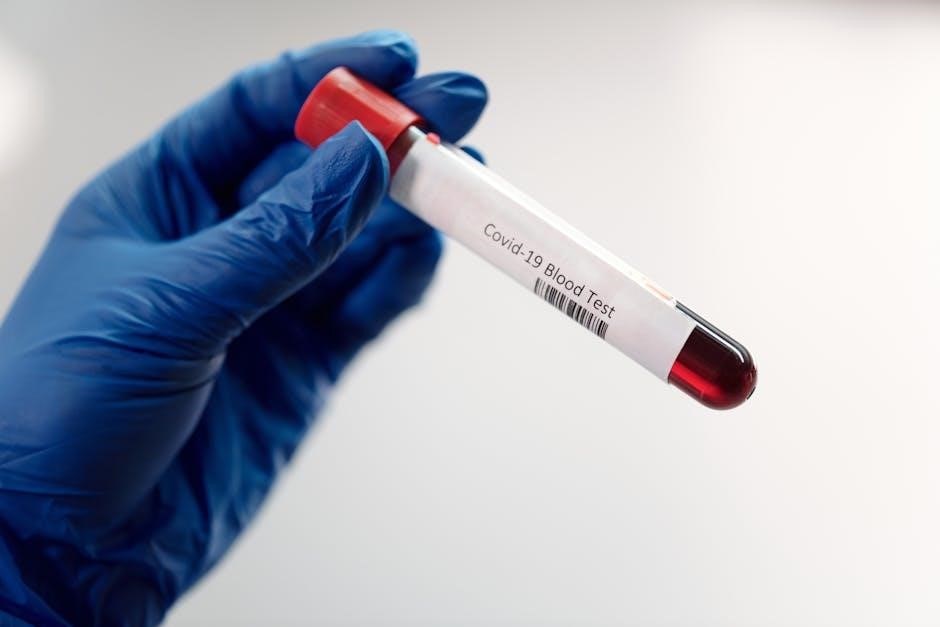
Proper swab handling is crucial to maintain sample integrity for the QuickVue Strep A test. Immediately after collection, remove the swab from its packaging without touching the flocked tip. After swabbing, carefully break the swab at the designated breakpoint, discarding the handle according to biohazard waste protocols.
The flocked tip containing the collected specimen must be inserted into the provided extraction tube, ensuring complete immersion in the liquid. Vigorously rotate the swab within the tube for at least 10-15 seconds to elute the captured organisms. Squeeze the sides of the tube while extracting the swab to maximize sample recovery. Process the sample promptly to avoid degradation.
Test Procedure Details
Test Procedure Details for the QuickVue Strep A test involve precise steps for accurate results. After specimen preparation, dispense exactly three drops of the extracted sample into the sample well of the test cassette, avoiding air bubbles. Initiate the timer immediately upon sample addition.
Observe the flow of the sample across the membrane. The test requires a specific incubation time, typically 5-8 minutes, as outlined in the package insert. Do not read results before or after the recommended time frame. Ensure the test is performed on a clean, flat surface, and avoid direct sunlight or extreme temperatures during incubation.
Adding Specimen to the Test Cassette
To begin, carefully remove the QuickVue Strep A test cassette from its sealed pouch. Holding the cassette vertically, dispense precisely three drops of the prepared specimen – extracted from the throat swab – directly into the sample well. Avoid introducing any air bubbles during this process, as they can interfere with accurate results.
Ensure the drops fall directly into the well and are fully absorbed. Do not use excessive amounts of specimen. Initiate the timer immediately after adding the sample. Proper specimen addition is crucial for optimal test performance and reliable interpretation of the results. Follow the package insert’s instructions meticulously.
Incubation Time and Conditions
Following specimen addition, allow the QuickVue Strep A test cassette to incubate at room temperature – ideally between 15-30°C (59-86°F) – for a precise five minutes. Avoid direct sunlight or extreme temperature fluctuations during incubation, as these can compromise test accuracy.
Do not attempt to read the results before or after the designated five-minute timeframe. Maintaining the correct incubation conditions is vital for the proper development of the test bands. Any deviation from the recommended time or temperature may lead to inaccurate interpretations, potentially resulting in false-positive or false-negative outcomes.
Interpreting the Results
QuickVue Strep A test results are visually determined by the presence or absence of colored lines. A positive result is indicated by three distinct lines: a control line, a test line, and a background line. Even a faint test line signifies a positive result, requiring further clinical evaluation.
A negative result displays only one line – the control line – indicating the absence of Strep A antigens. An invalid result occurs if no control line appears, regardless of any test line presence, necessitating a repeat test with a new device. Always carefully review the test cassette within the specified timeframe for accurate interpretation.
Positive Result Indication
A positive QuickVue Strep A test result is visually confirmed by the distinct appearance of three colored lines on the test cassette. The control line must always be present to validate the test. Alongside the control line, both a test line and a background line will become visible, even if the test line appears faint.
Any visible test line, regardless of its intensity, signifies the detection of Group A streptococcal antigens. A positive result strongly suggests a streptococcal pharyngitis infection and warrants prompt clinical assessment and appropriate treatment decisions by a healthcare professional.
Negative Result Indication
A negative QuickVue Strep A test result is indicated when only the control line appears on the test cassette. The absence of any visible test line, even a faint one, signifies that Group A streptococcal antigens were not detected in the specimen. However, a negative result does not entirely rule out a streptococcal infection.
False negative results can occur due to insufficient bacterial load, improper specimen collection, or variations in antigen expression. Clinical judgment, alongside patient symptoms and potentially follow-up testing (like a throat culture), is crucial for accurate diagnosis and appropriate patient management when a negative result is obtained.
Invalid Result Explanation
An Invalid QuickVue Strep A test result is indicated when the control line fails to appear on the test cassette, regardless of whether a test line is present. This signifies that the test did not run correctly, and the result is unreliable. Several factors can contribute to an invalid outcome, including insufficient specimen volume, improper procedural steps, or a defective test device.
If an invalid result occurs, the test should be repeated using a new test cassette and a fresh specimen. It’s crucial to carefully review the test procedure to ensure all steps are followed accurately. If repeated testing continues to yield invalid results, contact Quidel’s technical support for assistance and potential troubleshooting guidance.

Quality Control and Considerations
QuickVue Strep A tests require adherence to established quality control procedures, including proficiency testing, to ensure accurate and reliable results consistently.
Quality Control Procedures
Quality control is paramount when utilizing the QuickVue Strep A Test to guarantee dependable outcomes. Regularly review and document all test results, both positive and negative, maintaining detailed records for traceability. Implement a system for tracking test performance, including the use of control samples as outlined in the package insert.
Participate in proficiency testing programs to assess the accuracy of your testing procedures and personnel competency. Follow the manufacturer’s instructions meticulously regarding reagent storage, handling, and expiration dates. Ensure proper instrument calibration and maintenance, if applicable. Document any deviations from standard procedures and investigate any discrepancies promptly. Adhering to these quality control measures minimizes errors and ensures patient safety.
Limitations of the QuickVue Strep A Test
The QuickVue Strep A Test, while rapid and convenient, possesses certain limitations. A negative result doesn’t entirely exclude a strep infection, as low bacterial loads may yield false negatives. The test detects Group A Streptococcus only; it won’t identify other pharyngeal pathogens.
Heterophile antibody interference can potentially cause false positive results. Improper specimen collection or handling can compromise accuracy. Results should always be interpreted alongside clinical signs and symptoms, and confirmed with a culture if clinically indicated, especially in cases of atypical presentations or treatment failure. The test is a screening tool, not a definitive diagnosis.

Post-Test Procedures
QuickVue Strep A test waste should be disposed of according to biohazard guidelines; document all results accurately and report them promptly to healthcare providers.
Specimen Disposal Guidelines
Following the QuickVue Strep A test, proper disposal of all materials is crucial to prevent contamination and ensure laboratory safety. Used swabs, test cassettes, and any other components that came into contact with the patient’s sample must be treated as biohazardous waste.
Dispose of these items immediately into appropriately labeled biohazard containers, adhering to your institution’s specific protocols and local regulations. Do not discard these materials into regular trash receptacles. Always wear appropriate personal protective equipment, such as gloves and lab coats, during the disposal process.

Ensure the biohazard containers are sealed securely when full and handled according to established waste management procedures. Proper disposal minimizes the risk of infection spread and maintains a safe laboratory environment for all personnel.
Documentation and Reporting
Accurate documentation is paramount when performing the QuickVue Strep A test. Record the patient’s identification, the date and time of the test, the operator’s initials, and the complete test result – positive, negative, or invalid – in the patient’s medical record.
Detailed records should also include any observed issues during the test procedure, such as deviations from standard protocols. Reporting procedures vary by institution; follow established guidelines for notifying healthcare providers of positive results promptly.
Maintain a logbook of quality control results and any troubleshooting steps taken. Proper documentation ensures traceability, supports clinical decision-making, and facilitates accurate data analysis for quality improvement initiatives.

Troubleshooting Common Issues
Addressing discrepancies like false positives or negatives requires reviewing the procedure, verifying controls, and considering repeat testing for confirmation.
False Positive Results
A false positive QuickVue Strep A result indicates the test detected Streptococcus pyogenes antigens when none were actually present in the sample. Several factors can contribute to this outcome. Prior streptococcal infection, even if resolved, might leave residual antigens detectable for a short period. Non-group A streptococci, while not the target of the test, can sometimes cause cross-reactivity, leading to an inaccurate positive reading.
Furthermore, improper test procedure, such as inadequate swab technique or contamination during sample collection, can introduce false positives. It’s crucial to adhere strictly to the manufacturer’s instructions. If a false positive is suspected, consider repeating the test with a fresh sample and confirming the result with a culture, which is considered the gold standard for strep throat diagnosis. Always document any discrepancies and investigate potential sources of error.
False Negative Results
A false negative QuickVue Strep A result means the test failed to detect Streptococcus pyogenes antigens when they were present. This can occur if the bacterial load in the throat is low, particularly early in the infection. Insufficient sample collection, using a poor swabbing technique, is a common cause, failing to adequately collect cells from the posterior pharynx and tonsils.
Additionally, improper storage or transport of the specimen, or allowing excessive time to pass between collection and testing, can degrade the antigens, leading to a missed detection. Performing the test outside the recommended incubation time or conditions can also yield inaccurate negative results. Confirmation with a throat culture is recommended if clinical suspicion remains high, despite a negative rapid strep test, to ensure accurate diagnosis and appropriate treatment.
Related Posts
chamberlain c2202 installation instructions
Chamberlain C2202 Installation Overview Chamberlain’s C2202 chain drive garage door…

wonderland cake instruction crossword clue
Wonderland Cake Instruction Crossword Clue: A Comprehensive Guide This guide…

post op tooth extraction instructions
Post-Op Tooth Extraction Instructions: A Comprehensive Guide Navigating recovery after…