Laser Drilling: A Comprehensive Guide
Laser drilling is a non-contact process utilizing focused light to ablate materials, creating precise holes quickly and efficiently across diverse industries.

What is Laser Drilling?
Laser drilling represents a sophisticated, non-contact method for creating holes in a vast array of materials. Unlike traditional drilling, it employs a highly focused laser beam with exceptional energy density to ablate material, effectively vaporizing it and forming the desired aperture. This process offers significant advantages, including superior speed and precision compared to conventional techniques.
It’s becoming increasingly prevalent in sectors like automotive and medical device manufacturing due to its ability to handle diverse materials and reduce operational costs. Different laser types are utilized based on the specific material being processed.
The Core Principles of Laser Ablation
Laser ablation, the fundamental process behind laser drilling, involves the removal of material from a surface through the precise application of laser energy. When a laser beam impacts a material, its photons transfer energy, causing rapid heating, melting, and ultimately, vaporization. This phase transition bypasses the liquid state, directly converting the material into a plasma or gaseous state.
The efficiency of ablation depends on factors like laser wavelength, pulse duration, and material properties, resulting in a clean and accurate hole formation.
Types of Lasers Used in Drilling
Various laser types cater to diverse drilling needs, each possessing unique characteristics. The selection hinges on the material being processed and desired precision. Common choices include CO2 lasers, known for their versatility in handling numerous materials, and Nd:YAG lasers, prized for their precision and ability to work with metals.
Fiber lasers are also prominent, offering high power and efficiency, making them ideal for demanding applications requiring speed and accuracy.
CO2 Lasers for Material Removal
CO2 lasers excel at material removal through thermal ablation, making them suitable for a broad spectrum of non-metallic materials like plastics, wood, and ceramics. Their wavelength is efficiently absorbed by these substances, leading to rapid vaporization. However, CO2 lasers generally struggle with highly reflective metals.
They offer a cost-effective solution for many drilling applications, balancing power and precision, though often requiring slower processing speeds compared to other laser types.
Nd:YAG Lasers: Precision and Versatility
Nd:YAG lasers provide exceptional precision and versatility, capable of drilling a wide range of materials, including metals, ceramics, and plastics. Their shorter wavelength allows for tighter focusing, resulting in smaller, more accurate holes. This makes them ideal for applications demanding high precision.
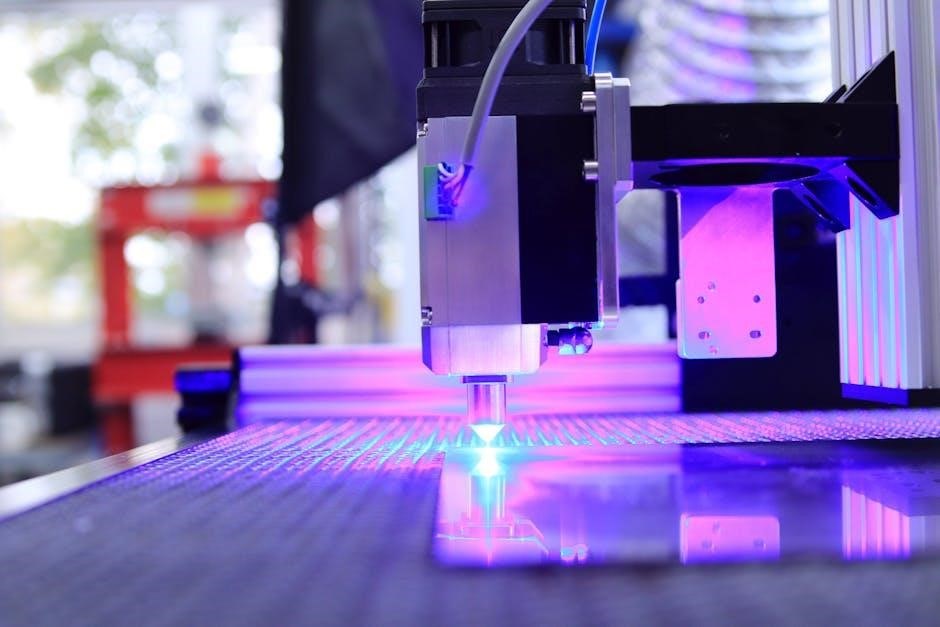
Nd:YAG lasers can operate in both continuous wave and pulsed modes, offering flexibility for different material types and thicknesses, though they can be more expensive than CO2 lasers.
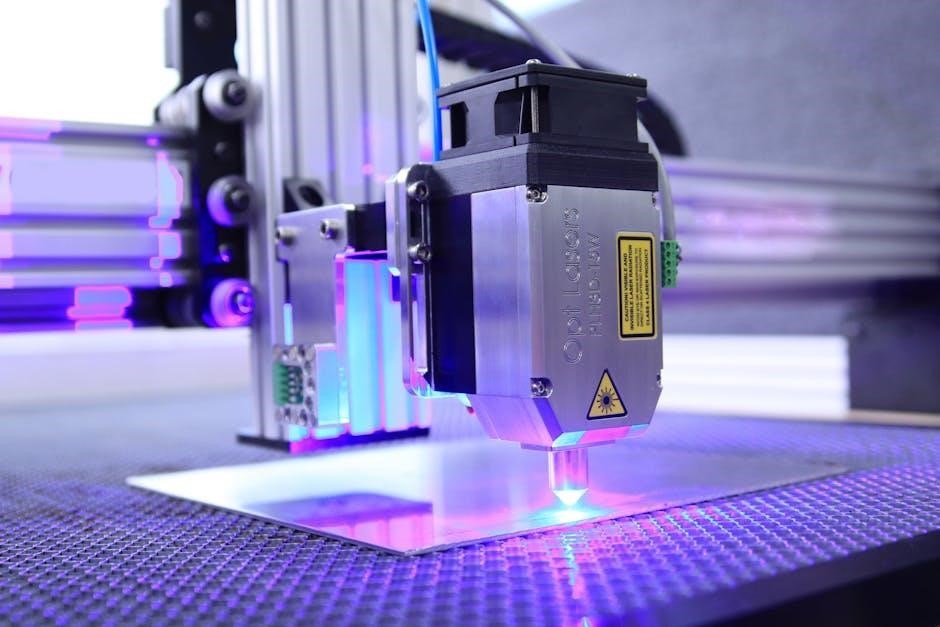
Fiber Lasers: High Power and Efficiency
Fiber lasers are renowned for their high power output and exceptional efficiency, making them suitable for demanding drilling applications. They deliver a concentrated beam with excellent beam quality, enabling fast material removal and precise hole creation.
Their compact size and low maintenance requirements further enhance their appeal. Fiber lasers excel at processing reflective materials, often challenging for other laser types, offering a robust and reliable drilling solution.
Materials Suitable for Laser Drilling
Laser drilling demonstrates versatility across a broad spectrum of materials, though optimization is key. Metals and alloys can be processed, but limitations exist based on reflectivity and thermal conductivity. Plastics and polymers respond well, requiring careful parameter adjustments to avoid melting or charring.
Even ceramics and composites are viable, demanding precise control to achieve clean, damage-free holes. Material properties dictate the optimal laser type and settings for successful drilling.

Metals and Alloys: Capabilities and Limitations
Laser drilling of metals and alloys offers high precision, but reflectivity poses a challenge; some materials absorb laser energy poorly. Stainless steel and aluminum are commonly drilled, while highly reflective metals like copper and gold require higher power or specialized lasers.
Alloy composition impacts drillability, and heat-affected zones are a concern. Careful parameter control minimizes distortion and maintains material integrity during the process.
Plastics and Polymers: Optimizing Laser Parameters
Laser drilling plastics and polymers demands careful parameter optimization to prevent melting, charring, or excessive material buildup. Lower laser power and higher pulse frequencies are generally preferred to achieve clean holes.
Assist gas selection is crucial; air or nitrogen effectively removes debris. Polymer type significantly influences settings – thermoplastics behave differently than thermosets. Precise control minimizes thermal damage and ensures accurate drilling.
Ceramics and Composites: Achieving Clean Holes
Laser drilling ceramics and composites presents unique challenges due to their brittle nature and complex compositions. Shorter pulse durations and higher peak powers are often necessary to induce localized ablation without causing widespread cracking.
Employing appropriate assist gases, like oxygen or helium, aids in debris removal and enhances the drilling process. Careful parameter tuning is vital to prevent delamination or thermal stress, ensuring clean, precise holes.
Advantages of Laser Drilling
Laser drilling offers significant advantages over traditional methods. Its non-contact nature eliminates tool wear, reducing operating costs and minimizing the risk of material contamination. The process delivers superior speed and precision, crucial for intricate designs.
Furthermore, laser drilling excels in creating small, closely spaced holes with exceptional accuracy. This capability makes it ideal for applications demanding high levels of detail and repeatability across various materials.
Precision and Accuracy in Hole Creation
Laser drilling stands out for its remarkable precision, capable of creating incredibly small and accurately positioned holes. This is achieved through the focused energy of the laser beam, allowing for tight tolerances and consistent results.
Unlike mechanical drilling, laser drilling minimizes burrs and material distortion, leading to cleaner, higher-quality holes. This level of accuracy is particularly vital in industries like medical device manufacturing and aerospace, where precision is paramount.
Speed and Efficiency Compared to Traditional Methods
Laser drilling significantly surpasses traditional drilling methods in both speed and efficiency. The non-contact nature of the process eliminates tool wear, reducing downtime for bit changes and maintenance. This translates to faster production cycles and lower overall costs.
Furthermore, laser drilling can process materials much quicker, especially in high-volume applications. Its ability to rapidly create holes without physical force makes it ideal for automating complex drilling tasks, boosting productivity substantially.
Reduced Tool Wear and Operating Costs
Laser drilling’s primary advantage lies in its non-contact methodology, virtually eliminating the tool wear associated with conventional drilling. This drastically reduces the frequency of tool replacement, a significant cost factor in traditional methods.
Consequently, operating costs are lowered due to minimized maintenance and reduced consumable expenses. The precision of laser drilling also minimizes material waste, contributing to further cost savings and increased efficiency in manufacturing processes.
Disadvantages of Laser Drilling
Despite its benefits, laser drilling presents certain drawbacks. The initial investment for laser systems is substantial, representing a significant capital expenditure. Material limitations exist, and the process can create heat-affected zones, potentially altering material properties.
Thermal damage and material distortion are also concerns, requiring careful parameter optimization. Not all materials are equally suitable for laser drilling, and achieving desired results often demands specialized expertise and precise control.
Initial Investment Costs of Laser Systems
Acquiring laser drilling equipment demands a significant upfront financial commitment. These systems, encompassing the laser source, optics, motion control, and safety enclosures, represent a substantial capital expenditure. Costs vary widely based on laser type, power, and automation level.
Compared to traditional drilling methods, the initial outlay is considerably higher. However, long-term operational savings, stemming from reduced tool wear and increased efficiency, can potentially offset this initial investment over time.
Material Limitations and Heat Affected Zones
While versatile, laser drilling isn’t universally applicable. Highly reflective materials, like copper and aluminum, pose challenges due to laser beam reflection, requiring specialized techniques. Certain materials may experience significant heat-affected zones (HAZ) during processing.
The HAZ, a region altered by the laser’s thermal energy, can impact material properties. Careful parameter optimization – pulse duration, power, and assist gas – is crucial to minimize HAZ and maintain material integrity, especially in sensitive applications.
Potential for Thermal Damage and Material Distortion
Excessive laser power or improper settings can induce thermal damage. This manifests as melting, vaporization, or changes in the material’s microstructure, compromising its functionality. Thin or delicate materials are particularly susceptible to distortion due to localized heating and thermal stress.
Controlling pulse parameters, employing effective cooling strategies (assist gases), and optimizing scanning speeds are vital to mitigate these risks. Careful consideration of material properties is essential for successful laser drilling.
Applications of Laser Drilling Across Industries
Laser drilling’s precision finds broad application. In aerospace, it’s crucial for manufacturing turbine blades and intricate components demanding high accuracy. The automotive sector utilizes it for creating fuel injector and sensor holes with speed and repeatability.
Medical device manufacturing benefits from laser drilling’s ability to produce precise micro-holes for implants and surgical tools. These industries leverage laser drilling’s advantages over traditional methods, enhancing product quality and efficiency.

Aerospace: Manufacturing Turbine Blades and Components
Laser drilling is vital in aerospace for complex parts. Turbine blades require incredibly precise cooling holes to withstand extreme temperatures, a task perfectly suited for laser technology. Components benefit from the accuracy and clean cuts achieved, reducing material waste and improving performance.
The non-contact nature minimizes stress on delicate parts, ensuring structural integrity. Laser drilling enables the creation of intricate geometries essential for modern engine efficiency and reliability.
Automotive: Fuel Injector and Sensor Hole Creation
Laser drilling plays a crucial role in automotive manufacturing, specifically in creating the tiny, precise holes required for fuel injectors and various sensors. These components demand high accuracy and clean edges for optimal fluid dynamics and signal transmission.
Compared to traditional methods, laser drilling offers faster processing times and reduced tool wear, lowering production costs. The process ensures consistent hole quality, enhancing engine performance and reliability.
Medical Device Manufacturing: Precise Micro-Hole Drilling
Laser drilling is indispensable in medical device manufacturing, where creating incredibly small and precise micro-holes is paramount. Applications include creating orifices in catheters, surgical instruments, and microfluidic devices, demanding exceptional accuracy and minimal thermal impact.
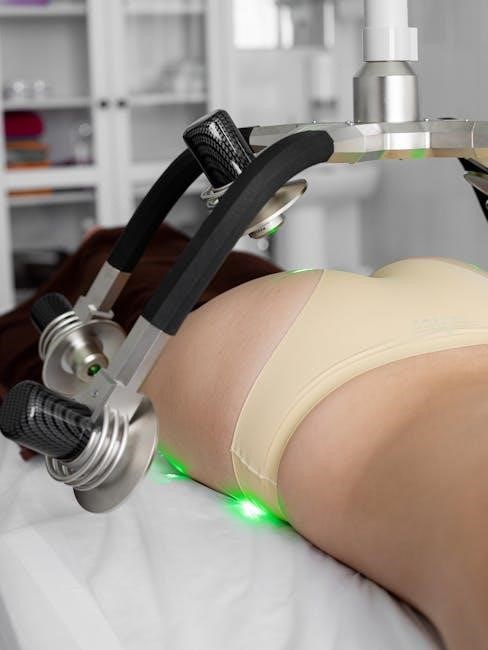
The non-contact nature of laser drilling minimizes contamination risks, crucial for sterile medical environments. It allows for complex geometries and intricate designs, enabling innovative medical solutions with enhanced functionality and patient outcomes.
Laser Drilling Parameters and Optimization
Optimizing laser drilling hinges on precise parameter control. Pulse duration and frequency significantly impact material removal rates and heat-affected zones; shorter pulses minimize thermal damage. Laser power and beam size dictate energy density and hole quality, requiring careful adjustment based on material properties.
Assist gas selection – often nitrogen or oxygen – aids in debris removal and cooling. Pressure regulation influences ablation efficiency and hole cleanliness. Achieving optimal results demands a systematic approach to parameter tuning.
Pulse Duration and Frequency Control
Precise control of pulse duration and frequency is crucial for optimal laser drilling. Shorter pulse durations – often measured in nanoseconds or picoseconds – deliver high peak power, minimizing heat accumulation and the heat-affected zone. Higher frequencies increase material removal rates, but can also elevate thermal stress.
Finding the ideal balance depends on the material; optimizing these parameters prevents distortion and ensures clean, accurate hole creation. Careful experimentation is key to achieving desired results.
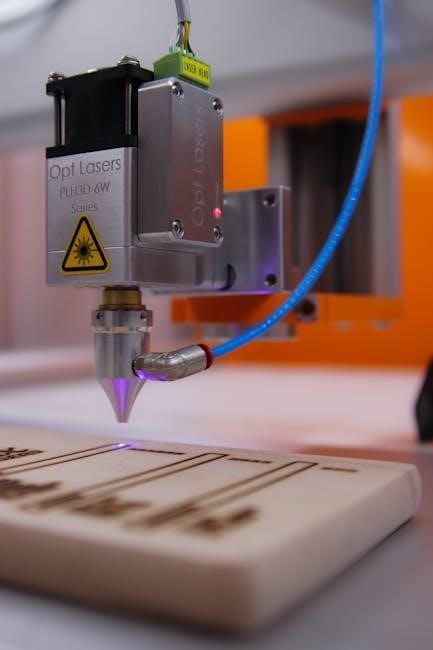
Laser Power and Beam Size Adjustment
Adjusting laser power and beam size directly impacts drilling performance. Higher power accelerates material ablation, but excessive power can cause unwanted thermal effects and wider heat-affected zones. Smaller beam sizes concentrate energy, enabling finer, more precise holes, ideal for intricate applications.
Careful calibration of these settings, considering material properties and desired hole characteristics, is essential for achieving optimal drilling results and minimizing defects.
Assist Gas Selection and Pressure Regulation
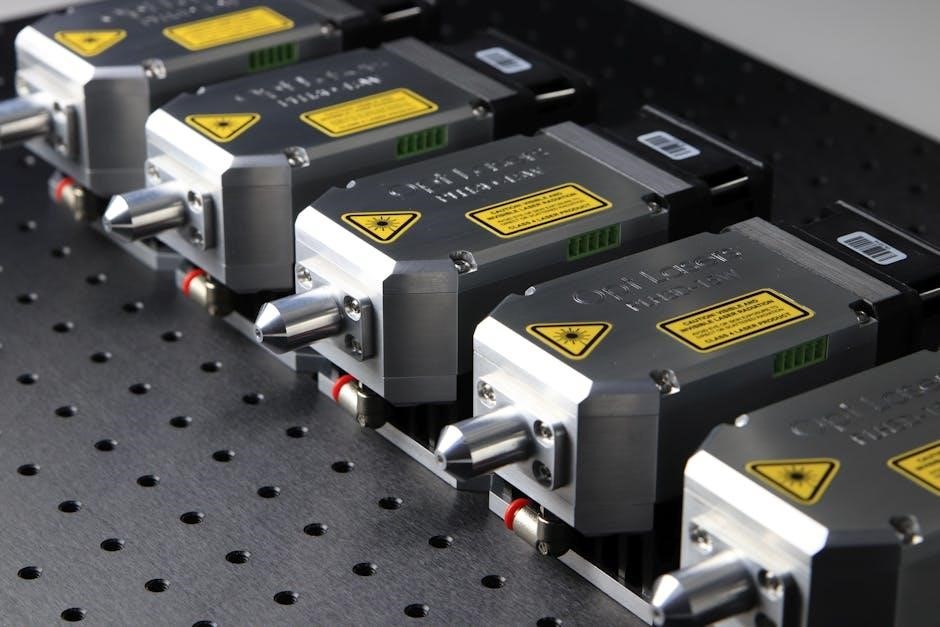
Assist gases play a crucial role in laser drilling, removing debris from the kerf and protecting the optics from contamination. Common choices include oxygen, nitrogen, and argon, each suited for different materials and applications. Oxygen enhances ablation in some metals, while inert gases prevent oxidation.
Precise pressure regulation optimizes debris removal and focuses the laser beam, improving hole quality and drilling speed. Incorrect pressure can lead to poor results.
Safety Considerations in Laser Drilling
Laser drilling demands strict safety protocols due to the high-intensity laser beams involved. Essential protective measures include wearing appropriate laser safety glasses specifically designed for the laser’s wavelength, and utilizing fully enclosed laser systems to prevent accidental exposure.
Effective fume extraction and ventilation systems are vital to remove hazardous particles generated during ablation. Comprehensive training and adherence to established operational procedures are paramount for safe operation.
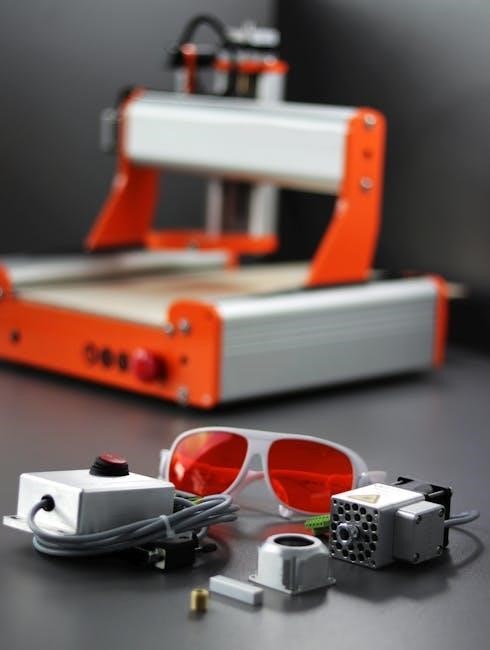
Laser Safety Glasses and Enclosure Requirements
Proper eye protection is non-negotiable; laser safety glasses must be selected based on the specific laser wavelength used, offering adequate optical density. Full enclosures are crucial, containing the laser beam and preventing stray reflections or accidental exposure to personnel.
Enclosures should be interlocked, automatically shutting down the laser if opened during operation. Regular inspection of both glasses and enclosures is vital to ensure continued effectiveness and compliance with safety standards.
Fume Extraction and Ventilation Systems
Laser ablation generates fumes and particulate matter, often containing hazardous materials depending on the workpiece. Effective fume extraction systems are therefore essential, capturing these byproducts at the source before they can disperse into the workspace.
These systems must be coupled with adequate general ventilation to maintain air quality. Regular filter replacement and system maintenance are critical for optimal performance and worker safety, ensuring a healthy operating environment.
Proper Training and Operational Procedures
Comprehensive training is paramount for all personnel operating laser drilling systems. This includes understanding laser safety protocols, machine operation, material-specific parameters, and emergency shutdown procedures. Detailed operational procedures should be documented and strictly followed to minimize risks.
Regular refresher courses and adherence to established safety guidelines are vital for preventing accidents and ensuring consistent, high-quality results. Proper training fosters a safe and productive work environment.
Related Posts

surfboard buying guide
Choosing the Right Surfboard for Your Skill Level Beginner surfers…

ohio candidate requirement guide 2024
Navigating Ohio’s electoral process demands meticulous adherence to specific guidelines.…

sylvania lamp cross reference guide
Sylvania Lamp Cross Reference Guide: An Overview (Updated 02/05/2026) Sylvania’s…