Biodynamic Growing Guide Cards: An Overview
Biodynamic growing guide cards offer a practical, condensed resource for farmers embracing holistic, organism-based agriculture, rooted in Rudolf Steiner’s principles and practices.
Biodynamic agriculture represents a profoundly ecological and ethical approach to farming, going beyond organic standards. It’s a method founded on the philosophical work of Rudolf Steiner, viewing the farm as a self-sustaining ecosystem – a living organism. Unlike conventional agriculture, which often focuses on isolated inputs and outputs, biodynamic farming emphasizes the interconnectedness of soil, plants, animals, and the wider cosmos.
Central to this system is the understanding that soil health is paramount. Biodynamic practices actively work to enhance soil vitality through composting, cover cropping, and the unique application of biodynamic preparations. These preparations, crafted from herbal and mineral substances, are believed to stimulate natural processes and improve the overall health of the farm. The goal isn’t simply to yield crops, but to cultivate a thriving, resilient farm ecosystem capable of nourishing both the land and the community.
Biodynamic agriculture isn’t merely a set of techniques; it’s a holistic worldview applied to agriculture, demanding careful observation and adaptation to the specific conditions of each farm.
The Philosophy of Rudolf Steiner
Rudolf Steiner, an Austrian philosopher, scientist, and educator, developed Anthroposophy – a spiritual philosophy that forms the bedrock of biodynamic agriculture. Steiner believed in a holistic understanding of nature, viewing the world as interconnected and imbued with spiritual forces. He posited that agricultural practices should align with these cosmic rhythms to foster healthy ecosystems and vibrant food.
Steiner’s lectures in 1924, responding to concerns about declining agricultural vitality, laid the foundation for biodynamic farming. He advocated for treating the farm as a unified organism, emphasizing the importance of diversity, and integrating animal husbandry. His philosophy stresses the need to move beyond purely materialistic approaches to agriculture, recognizing the subtle energies and influences that impact plant growth and soil health.
This perspective led to the development of biodynamic preparations – unique formulations designed to enhance soil fertility and plant resilience, reflecting Steiner’s belief in harnessing natural forces for agricultural benefit.
Core Principles of Biodynamic Farming
Core principles encompass holistic farm management, prioritizing soil health, fostering biodiversity, embracing interconnectedness, and avoiding synthetic inputs – all vital for thriving ecosystems.
Holistic Farm Management
Holistic farm management within biodynamic agriculture views the farm as a self-contained, living organism – a concept mirroring natural ecosystems like a wilderness forest. This approach necessitates perceiving and treating nature as an interconnected whole, where each element, from soil microbes to livestock, plays a crucial role in the farm’s overall health and vitality.
It moves beyond simply maximizing yields of individual crops, instead focusing on optimizing the farm’s resilience and long-term sustainability. Biodynamic farmers strive to integrate all aspects of the farm – crop production, animal husbandry, composting, and even social and economic factors – into a cohesive, balanced system. This interconnectedness means decisions aren’t made in isolation, but rather with consideration for their ripple effects throughout the entire farm ecosystem.
Essentially, biodynamic farming aims to cultivate a farm that is not merely productive, but truly alive and self-sustaining, minimizing external inputs and maximizing internal resource cycling.
The Importance of Soil Health
Soil health is paramount in biodynamic agriculture, considered the foundation of plant vitality and overall farm well-being. Unlike conventional farming that often relies on synthetic fertilizers, biodynamic practices prioritize building and maintaining a living, biologically active soil. This is achieved through extensive composting, the application of biodynamic preparations, and careful crop rotation strategies.
The goal isn’t simply to provide nutrients, but to foster a thriving soil microbiome – a complex community of bacteria, fungi, and other organisms that unlock nutrients, improve soil structure, and enhance plant immunity. Biodynamic preparations, like horn manure and horn silica, are believed to stimulate soil life and enhance the soil’s capacity to receive and transmit cosmic energies.
Healthy soil, in turn, leads to healthier plants, more nutritious food, and a more resilient farm ecosystem, capable of withstanding pests, diseases, and environmental stresses.
Biodiversity and Interconnectedness
Biodynamic agriculture fundamentally views the farm as a self-contained ecosystem, emphasizing the interconnectedness of all living organisms. This philosophy necessitates fostering biodiversity – a wide variety of plant and animal life – to create a resilient and balanced farm system. Monoculture, common in conventional farming, is actively avoided.
Crop rotation isn’t just about nutrient management; it’s about creating diverse habitats and breaking pest and disease cycles. Integrating livestock is also crucial, as animals contribute to soil fertility through manure and grazing, and play a role in nutrient cycling. Even seemingly ‘wild’ areas on the farm are valued for their contribution to overall ecological health.
This holistic approach recognizes that the health of the farm depends on the health of all its components, working together in a harmonious and dynamic relationship.
Biodynamic Preparations: The Heart of the System
Biodynamic preparations – unique herbal and mineral mixtures – are central to the system, enhancing soil vitality and crop health through specific, carefully crafted applications.
Preparation 500: Horn Manure
Preparation 500, often called horn manure, is arguably the most well-known biodynamic preparation. It’s created through a fascinating process: cow manure is fermented within a cow horn, buried over winter, and then exhumed in the spring. This lengthy process, guided by biodynamic principles, transforms the manure into a potent soil revitalizer.
The horn’s shape and material are believed to play a crucial role, harnessing cosmic forces during the fermentation. When applied – diluted in water and sprayed onto the land – Preparation 500 stimulates root development, improves soil structure, and enhances the soil’s capacity to retain moisture and nutrients. It’s considered vital for fostering a healthy, living soil ecosystem, promoting microbial activity and overall farm vitality.
Using Preparation 500 is a cornerstone of biodynamic farming, contributing to the holistic health and resilience of the entire farm organism. It’s a testament to the system’s unique approach to soil fertility and plant nourishment.
Preparation 501: Horn Silica
Preparation 501, known as horn silica, complements Preparation 500, focusing on the plant’s above-ground development and its connection to sunlight. This preparation involves finely ground quartz crystal – pulverized to a talcum powder consistency – placed inside a cow horn and buried in the earth for six months, mirroring the process of horn manure.
The burial and the horn itself are believed to imbue the silica with unique properties. When diluted and sprayed onto foliage, Preparation 501 enhances photosynthesis, improves fruit quality, and increases resistance to fungal diseases. It promotes the formation of protective cuticles on leaves, bolstering plant health and vitality.
Unlike 500’s focus on root growth and soil life, 501 works to optimize light absorption and transform solar energy into plant substance; It’s a key component in biodynamic farming, fostering balanced growth and enhancing the overall quality of crops.

Preparations 502-507: Compost Preparations
Preparations 502 through 507 are a series of six compost preparations, each crafted from specific herbs, minerals, and animal tissues. These aren’t directly applied to the land but are added to compost piles during their creation, significantly enhancing the composting process and the resulting compost’s vitality.
Each preparation addresses a different aspect of decomposition and nutrient availability. Yarrow (502) aids nitrogen fixation, chamomile (503) promotes calcium uptake, stinging nettle (504) boosts potassium, oak bark (505) supports iron metabolism, dandelion (506) enhances phosphorus, and valerian (507) balances the overall compost process.
These preparations are meticulously made and potentized, acting as catalysts to unlock the inherent energies within the compost. They transform ordinary compost into a dynamic, living fertilizer, enriching the soil and nourishing plants with a broad spectrum of nutrients and beneficial microorganisms.
Creating Biodynamic Growing Guide Cards
Biodynamic growing guide cards streamline complex practices into accessible formats, covering soil preparation, crop rotations, preparation applications, and lunar timing for optimal results.
Card 1: Soil Preparation & Compost
Soil Preparation: This card emphasizes avoiding chemical fertilizers, a cornerstone of biodynamic farming. Focus on building soil health through composting and cover cropping to enhance vitality. Detail methods for assessing soil structure and addressing deficiencies naturally. Include information on green manures and their role in nitrogen fixation and organic matter enrichment.
Compost Creation: Biodynamic compost isn’t simply decomposed matter; it’s a living ecosystem. This section outlines building compost piles incorporating diverse materials – greens, browns, and crucially, the biodynamic preparations (502-507). Explain the layering process, turning schedules, and the importance of aeration.
Preparation Integration: Specifically, detail how to incorporate the compost preparations into the pile, noting the quantities and timing. Highlight the role of these preparations in activating decomposition and enhancing the compost’s energetic qualities. A visual guide illustrating proper layering and preparation application would be beneficial.
Card 2: Crop Rotation & Associations
Crop Rotation Principles: Biodynamic farming prioritizes diverse crop rotations, moving beyond simple nutrient replenishment. This card details a four-year rotation plan – root crops, legumes, grains, and fallow/green manure – emphasizing the energetic qualities of each crop family. Explain how rotation breaks pest and disease cycles and improves soil structure.
Plant Associations: Beyond rotation, consider companion planting. This section outlines beneficial plant pairings – for example, planting basil near tomatoes to deter pests or using nitrogen-fixing legumes alongside heavy feeders. Include a chart illustrating compatible and antagonistic plant combinations.
Energetic Considerations: Biodynamic agriculture recognizes subtle energies. The card should briefly touch upon the influence of planetary forces and astrological timing on crop selection and planting. Emphasize observing the farm as a holistic system, noting how different crops influence each other beyond their physical needs.
Card 3: Biodynamic Preparations Application
Preparation 500 (Horn Manure): This card details the application of 500, crucial for soil life. Instructions cover dilution ratios (1:500), stirring techniques (using a specific vortex motion for an hour), and optimal timing – typically autumn, before winter freeze. Highlight its role in stimulating humus formation.
Preparation 501 (Horn Silica): Focus on 501’s application for leaf development and photosynthesis. Explain dilution (1:300), stirring, and spraying during clear, sunny mornings. Note its impact on plant resilience and fruit quality.
Compost Preparations (502-507): Outline how to incorporate these into compost piles. Detail the small quantities needed and their function in accelerating decomposition and enhancing nutrient availability. Emphasize the importance of proper composting techniques alongside preparation use.
General Guidelines: Stress the importance of applying preparations rhythmically and observing their effects on the farm ecosystem.
Card 4: Timing & Lunar Calendar
Lunar Rhythms: This card explains the significance of the lunar calendar in biodynamic farming. Detail the four lunar phases – root, leaf, flower, and fruit – and their corresponding activities. Root days are ideal for root crop work, leaf days for foliage, flower days for blossoms, and fruit days for harvesting.
Stellar Influences: Briefly introduce the influence of planetary positions, particularly constellations, on plant growth. Explain how certain constellations favor specific plant parts (e.g., fruit constellations for ripening).
Preparation Application Timing: Connect preparation applications to lunar phases. For example, 500 is often applied during a descending moon to encourage root activity, while 501 is used during an ascending moon for leaf growth.
Practical Calendar: Include a simplified lunar calendar section for the current year, highlighting optimal days for various farm tasks. Emphasize observation and adaptation to local conditions.

Implementing Biodynamic Practices
Transitioning to biodynamic farming involves integrating animal systems, mindful water use, and holistic pest/weed control, enhancing farm vitality and ecological balance.
Integrating Animal Husbandry
Biodynamic practices deeply value the integration of livestock, recognizing their crucial role in creating a self-sustaining farm ecosystem. Animals aren’t merely production units; they contribute significantly to soil fertility through manure, enriching the land and fostering a closed-loop system.
Proper animal husbandry within a biodynamic framework emphasizes species-appropriate care, allowing animals to express their natural behaviors. This includes rotational grazing, which mimics natural patterns and prevents overgrazing, promoting pasture health and biodiversity. The manure produced is then composted, often utilizing biodynamic preparations, to create a potent soil amendment.
This interconnectedness extends beyond fertilization; animals help control weeds and pests naturally, reducing the need for external inputs. The farm becomes a living organism where each element – plants, animals, soil, and humans – supports and benefits the others, fostering resilience and long-term sustainability. Careful consideration of animal welfare is paramount, aligning with the holistic philosophy of biodynamic agriculture.
Water Management in Biodynamic Systems
Biodynamic agriculture approaches water management as an integral part of the farm’s overall health, emphasizing quality over quantity and mimicking natural hydrological cycles. The goal isn’t simply irrigation, but fostering the land’s capacity to retain moisture and support thriving ecosystems.
Key practices include building soil organic matter through composting and cover cropping, which dramatically improves water infiltration and reduces runoff. Swales and contour planting are often employed to slow water flow, allowing it to permeate the soil and recharge groundwater reserves. Ponds and wetlands can be integrated to create habitats and further enhance water retention.
Biodynamic preparations, particularly horn manure (Preparation 500), are believed to enhance the soil’s ability to bind water. Careful observation of weather patterns and lunar cycles informs irrigation decisions, ensuring water is applied when most beneficial to plant growth. Ultimately, biodynamic water management aims to create a resilient system that minimizes reliance on external water sources.
Weed & Pest Control (Biodynamic Approach)
Biodynamic pest and weed control diverges significantly from conventional methods, prioritizing prevention and ecological balance over direct intervention. The focus is on creating a robust, diverse farm system where plants thrive and are naturally resistant to pests and diseases. Healthy soil, achieved through composting and preparations, is foundational to this approach.
Weeds are viewed not as enemies, but as indicators of soil imbalances. Addressing these imbalances – often through specific compost preparations or cover crops – is preferred over herbicide application. Companion planting and crop rotations disrupt pest cycles and create beneficial habitats for predatory insects.
If intervention is necessary, biodynamic farmers favor natural solutions like herbal teas or beneficial insect releases. The use of synthetic pesticides and herbicides is strictly avoided, as they disrupt the farm’s delicate ecosystem. Observation and understanding the interconnectedness of the farm are crucial for effective, sustainable pest and weed management.

Biodynamic Growing Guide Cards ౼ Specific Crops
Specific crop cards detail tailored biodynamic practices for optimal growth, considering unique needs – from grapevines to vegetables and fruit trees – enhancing vitality.
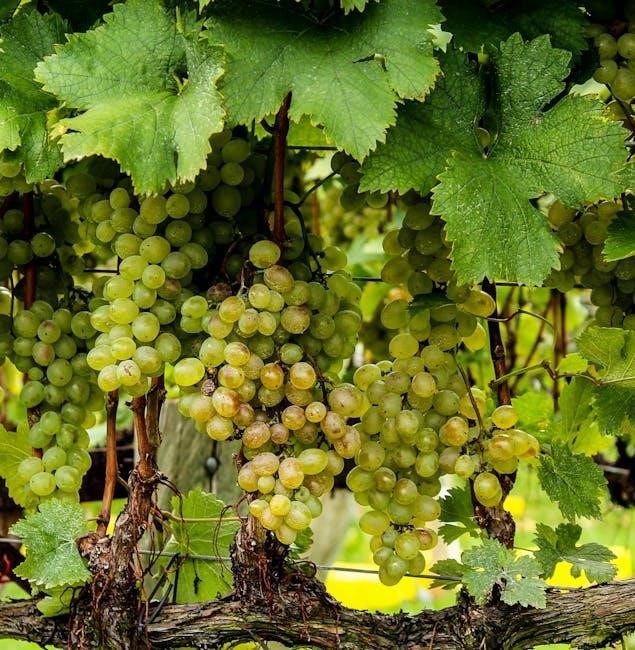
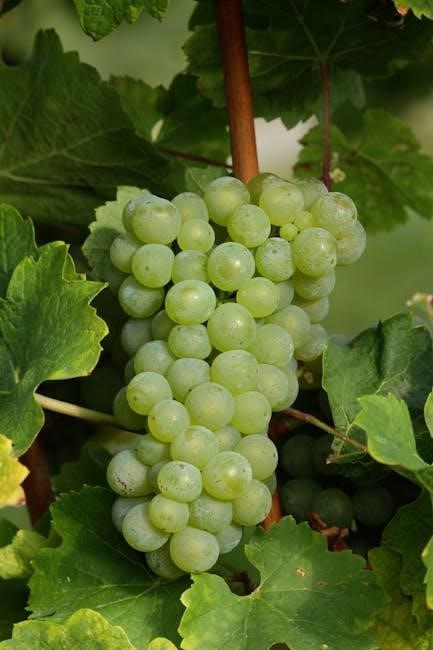
Card 5: Biodynamic Grape Growing
Grapevine vitality thrives through biodynamic methods, emphasizing soil health and vine-to-environment connection. This card details preparation 500 (horn manure) applications, timed with lunar cycles, to boost root development and fruit quality.
Compost preparations, 502-507, are crucial for enriching the vineyard soil, fostering microbial life, and enhancing nutrient availability. Crop rotation, incorporating cover crops like legumes, improves soil structure and nitrogen fixation.
Biodiversity is key; encourage beneficial insects and pollinators by planting companion plants. Careful pruning, aligned with biodynamic calendar dates, optimizes airflow and sunlight exposure. Observe the vineyard holistically, recognizing it as a living organism.
Preparation 501 (horn silica), applied as a spray, enhances photosynthesis and strengthens vine resilience. Monitor vine health closely, addressing imbalances with appropriate preparations and practices. Biodynamic grape growing aims for wines expressing terroir and vitality.
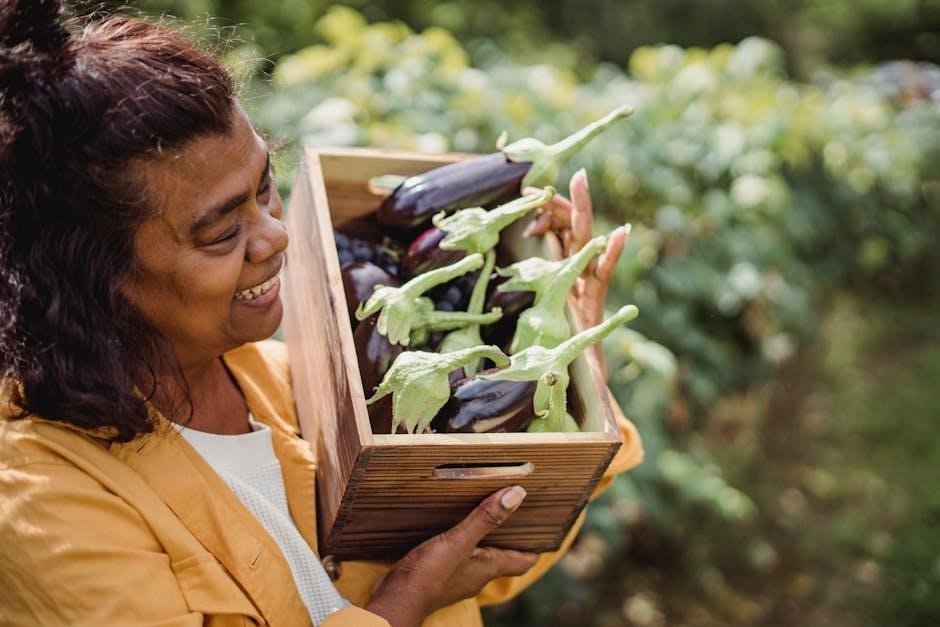
Card 6: Biodynamic Vegetable Gardening
Successful vegetable gardens flourish with biodynamic principles, prioritizing soil fertility and plant health. This card outlines compost creation, utilizing biodynamic preparations (502-507) to activate decomposition and enhance nutrient content. Regular applications of 500 (horn manure) stimulate root growth and overall plant vigor.
Crop rotation is essential; follow a planned sequence to prevent nutrient depletion and pest build-up. Companion planting, pairing vegetables with beneficial herbs and flowers, boosts biodiversity and natural pest control.
Lunar rhythms guide sowing and harvesting times, aligning with plant energies. Observe your garden holistically, noting plant interactions and environmental factors. Avoid synthetic fertilizers and pesticides, relying on natural solutions.
Preparation 501 (horn silica) strengthens plant tissues and improves light absorption. Consistent observation and adaptation are key to a thriving biodynamic vegetable garden, yielding nutritious and flavorful produce.
Card 7: Biodynamic Fruit Tree Management
Biodynamic orchard management centers on fostering a self-sustaining ecosystem. Begin with comprehensive soil preparation, enriching it with compost activated by biodynamic preparations – particularly 500 (horn manure) to encourage robust root systems. Pruning should follow natural tree forms, promoting airflow and sunlight penetration.
Companion planting under trees enhances biodiversity; consider nitrogen-fixing plants and beneficial insect attractors. Utilize 501 (horn silica) sprays to strengthen tree tissues and improve fruit quality, enhancing resistance to disease.
Observe lunar cycles for optimal grafting, pruning, and harvesting times. Integrate animal grazing carefully to manage grass and fertilize the soil naturally. Avoid synthetic inputs, prioritizing holistic health.
Regular applications of compost tea and biodynamic preparations maintain soil vitality. A biodynamic orchard aims for long-term health, resilience, and the production of flavorful, nutrient-rich fruit.
Resources & Further Learning
Explore biodynamic associations for certifications and guidance, and delve into recommended reading and websites to expand your knowledge of this farming approach.
Biodynamic Associations & Certifications
Demeter International stands as the largest certifying organization for biodynamic agriculture globally, offering a recognizable standard for farms and products adhering to these principles. Seeking Demeter certification involves a rigorous inspection process, evaluating the entire farm system – from soil health and biodiversity to animal welfare and the application of biodynamic preparations.
Biodynamic Association (BDA) is a prominent organization, particularly in North America, providing education, resources, and certification services. They support farmers transitioning to biodynamic methods and offer workshops, conferences, and a vibrant community for learning and collaboration. Certification through the BDA signifies a commitment to the full spectrum of biodynamic practices.
Other regional biodynamic organizations exist worldwide, each contributing to the growth and understanding of this agricultural philosophy. These associations often provide localized support, training, and networking opportunities for farmers and gardeners. Certification isn’t merely a label; it represents a dedication to ecological integrity and a holistic approach to food production.
Recommended Reading & Websites
“Agriculture Course: The Birth of the Biodynamic Method” by Rudolf Steiner is the foundational text, detailing the original lectures that birthed biodynamic agriculture. It’s a complex read, but essential for understanding the philosophical underpinnings. “The Biodynamic Farm” by Ehrenfried Pfeiffer offers a practical guide to implementing biodynamic principles on a working farm, covering preparations, crop rotation, and livestock management.
For online resources, Demeter USA’s website (demeterusa.org) provides comprehensive information on certification standards, biodynamic principles, and a directory of certified farms and products. The Biodynamic Association (biodynamic.org) offers educational materials, event listings, and a wealth of articles on biodynamic practices.
New Seed’s website (newseed.org) is a valuable resource for learning about biodynamic preparations and sourcing high-quality ingredients. Exploring these resources will deepen your understanding and support your journey into biodynamic growing, fostering a more sustainable and holistic approach to agriculture.