Understanding insect eggs is crucial for pest control and appreciating biodiversity. This guide provides essential knowledge for recognizing various eggs, aiding in timely intervention and ecological awareness.
Why Identifying Insect Eggs Matters
Accurate insect egg identification is paramount for proactive pest management. Discovering eggs early allows for intervention before infestations become widespread, minimizing damage to plants and structures. Knowing which eggs belong to beneficial insects – like ladybugs – prevents accidental harm to allies in your garden.
Furthermore, identification aids in understanding insect life cycles and behaviors. This knowledge informs targeted control strategies, reducing reliance on broad-spectrum pesticides. Recognizing eggs of invasive species, such as the Spotted Lanternfly, is vital for preventing their establishment and spread, protecting ecosystems and agriculture.
Ultimately, the ability to distinguish between pest and beneficial insect eggs empowers informed decision-making, fostering a balanced and sustainable approach to insect control. It’s a key skill for gardeners, farmers, and anyone interested in protecting their environment.
Challenges in Insect Egg Identification
Identifying insect eggs presents several hurdles. Their diminutive size often necessitates magnification for detailed observation, and many eggs lack distinctive features visible to the naked eye. Color variations within a single species, influenced by age or environment, can further complicate matters.
Moreover, eggs of different insect species can exhibit remarkable similarities, particularly in early developmental stages. Location alone isn’t always definitive, as some insects lay eggs opportunistically on various host plants. The protective coatings or masses (like oothecae) surrounding eggs can obscure their underlying morphology.
Finally, a lack of comprehensive reference materials and the sheer diversity of insect species contribute to the difficulty. Accurate identification requires a keen eye, patience, and often, expert consultation. Distinguishing between pest and beneficial eggs adds another layer of complexity, demanding a thorough understanding of local insect fauna.
Common Insect Egg Types & Characteristics
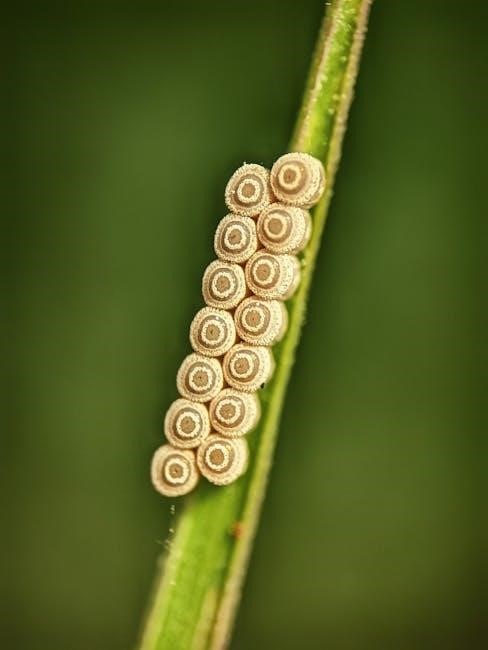
Insect eggs display incredible diversity – from tiny, clustered ant eggs to the protective oothecae of cockroaches. Shape, size, and location are key identifiers.
Aphid Eggs: Size, Shape & Location
Aphid eggs are remarkably small, often appearing as tiny, oval or lemon-shaped structures, typically less than 1mm in length. Their color can vary from pale green to black, depending on the aphid species and the age of the egg. These eggs possess a protective coating that helps them withstand harsh winter conditions.
Location is a critical identifying factor. Aphids frequently deposit their eggs on the stems, buds, and undersides of leaves of their host plants. Overwintering eggs are commonly found on perennial plants like roses, fruit trees, and various shrubs. In spring, these eggs hatch, giving rise to wingless females that begin to colonize new growth.
Distinguishing aphid eggs from other insect eggs requires close inspection. Unlike some eggs laid in masses, aphid eggs are usually laid singly or in small, scattered groups. Observing the host plant and looking for signs of aphid infestation, such as distorted leaves or sticky honeydew, can further aid in identification. Early detection of aphid eggs is vital for implementing effective pest management strategies.
Spider Eggs: Sacs, Silk & Appearance
Spider eggs are rarely laid individually; instead, they are typically enclosed within silken sacs. These sacs vary significantly in shape and size depending on the spider species, ranging from small, spherical orbs to larger, irregularly shaped masses. The silk provides crucial protection against predators, desiccation, and temperature fluctuations.
Appearance of the sacs also differs. Some are papery and delicate, while others are robust and leathery. Coloration can range from white or cream to brown or grey. Inside the sac, numerous eggs are packed tightly together, often numbering in the hundreds. The sac’s exterior may exhibit patterns or markings specific to the spider species.
Location is diverse, with sacs being found in sheltered locations like crevices, under leaves, within plant stems, or even inside buildings. Identifying spider egg sacs requires careful observation of the silk structure and the overall shape. It’s important to note that not all spiderlings emerge simultaneously, and the sac may remain visible for an extended period.
Cockroach Eggs: Oothecae & Identification
Cockroach eggs aren’t laid individually but are encased in protective structures called oothecae (singular: ootheca). These oothecae are essentially “egg cases” and are a key identifier for cockroach infestations. Their appearance varies depending on the species, but they generally resemble small, elongated, purse-shaped capsules.
Identification relies on recognizing these distinct cases. German cockroach oothecae are typically dark reddish-brown, about 5-8mm long, and can hold around 30-40 eggs. American cockroach oothecae are larger, around 10-12mm, and brownish. Oriental cockroach oothecae are darker and resemble tiny, irregularly shaped beads.
Location is crucial for detection. Oothecae are often found glued to surfaces in sheltered, warm, and humid areas – behind appliances, inside cabinets, under sinks, and in cracks and crevices. They are remarkably resilient and can withstand some cleaning attempts. Finding an ootheca confirms a cockroach presence, even if live insects aren’t immediately visible.
Ant Eggs: Tiny, White & Cluster Formation
Ant eggs are remarkably small, typically pearly white, and often described as resembling tiny grains of rice. Unlike many insect eggs, they are relatively soft and lack a hard outer shell, making them vulnerable if disturbed. Identifying ant eggs requires close observation due to their diminutive size – usually less than 1mm in length.
A key characteristic is their clustered formation. Ants don’t lay eggs individually; instead, they deposit them in groups or clusters within the nest. These clusters are often found in dedicated brood chambers, carefully maintained by worker ants. The eggs are frequently moved and repositioned to ensure optimal temperature and humidity for development.
Location within the nest is vital for identification. Look for these tiny white clusters in soil, wood, or other nesting materials. Observing worker ants tending to these clusters is a strong indicator of their identity. Distinguishing ant eggs from other small white particles requires magnification and careful attention to their clustered arrangement.
Beetle Eggs: Variety in Shape & Color
Beetle eggs exhibit an astonishing diversity in shape and color, making identification challenging. Unlike the uniformity seen in some insect eggs, beetle eggs can be spherical, oval, elongated, or even barrel-shaped. Their coloration is equally varied, ranging from pearly white and pale yellow to vibrant orange, red, or even black.
The shell (chorion) of beetle eggs often displays unique textures and patterns, sometimes appearing smooth, ribbed, or sculptured. Some species lay eggs singly, while others deposit them in clusters or rows. The specific shape and color often correlate with the beetle species and the host plant or environment.
Location is a crucial clue. Many beetle eggs are laid directly on or near the food source for the larvae. Careful examination of plant leaves, stems, and fruits, as well as decaying wood or soil, may reveal these diverse eggs. A magnifying glass is essential for observing the subtle details of their morphology.
Butterfly & Moth Eggs: Host Plant Specificity
Butterfly and moth eggs are renowned for their exquisite beauty and, crucially, their highly specific host plant requirements. Unlike many insects with broader dietary preferences, these eggs are almost always laid on the particular plant species that will serve as food for the emerging caterpillars.
Egg shapes vary considerably, from spherical and ribbed to spindle-shaped and flattened. Colors range from pale green and yellow to vibrant reds and purples. Often, the eggs are meticulously placed, sometimes singly, sometimes in neat rows or clusters, on leaves, stems, or even flower buds.
Identifying the host plant is therefore paramount to identifying the egg. Knowing which butterflies and moths frequent your area and their preferred plants narrows down the possibilities. Careful observation and a good field guide are essential tools for successful identification, as the lifecycle depends on this specificity.
Identifying Eggs on Plants
Locating eggs on plants requires keen observation. Consider the plant type, egg placement, and surrounding damage. A magnifying glass reveals crucial details for accurate identification.
Egg Location as a Clue to Insect Type
The placement of insect eggs on a plant often provides significant clues about the species responsible. Different insects exhibit distinct preferences for where they deposit their eggs, maximizing offspring survival and access to food sources. For example, aphids frequently lay eggs on the undersides of leaves, sheltered from predators and harsh weather conditions. Butterfly and moth eggs are typically found directly on the host plant, often near a potential food source for the emerging larvae.
Cockroach eggs, encased in protective oothecae, are often deposited in hidden, sheltered locations like crevices or under bark; Conversely, some beetle eggs are laid directly within plant tissue, ensuring the larvae have immediate access to nourishment. Observing the specific location – whether on stems, leaves, roots, or even within fruits – narrows down the possibilities and guides further investigation. Recognizing these patterns is a fundamental step in accurate insect egg identification and effective pest management.
Using a Magnifying Glass for Detailed Observation
Accurate insect egg identification frequently demands a closer look than the naked eye allows. A magnifying glass, or even a handheld microscope, becomes an indispensable tool for discerning subtle characteristics crucial for species determination. Examining eggs under magnification reveals details like surface texture – smooth, ribbed, or sculpted – and the presence of any unique markings or patterns.
Shape is also critical; eggs can be spherical, oval, cylindrical, or uniquely elongated. Color variations, ranging from pearly white to vibrant yellows, greens, or even reddish hues, provide further clues. Observing the chorion, the egg’s outer shell, for micropyles (tiny pores for sperm entry) can aid identification. Careful observation of egg size, often measured in millimeters, is also essential. A magnifying glass empowers you to distinguish between similar-looking eggs and confidently identify the insect species before an infestation escalates.
Distinguishing Between Beneficial & Pest Eggs
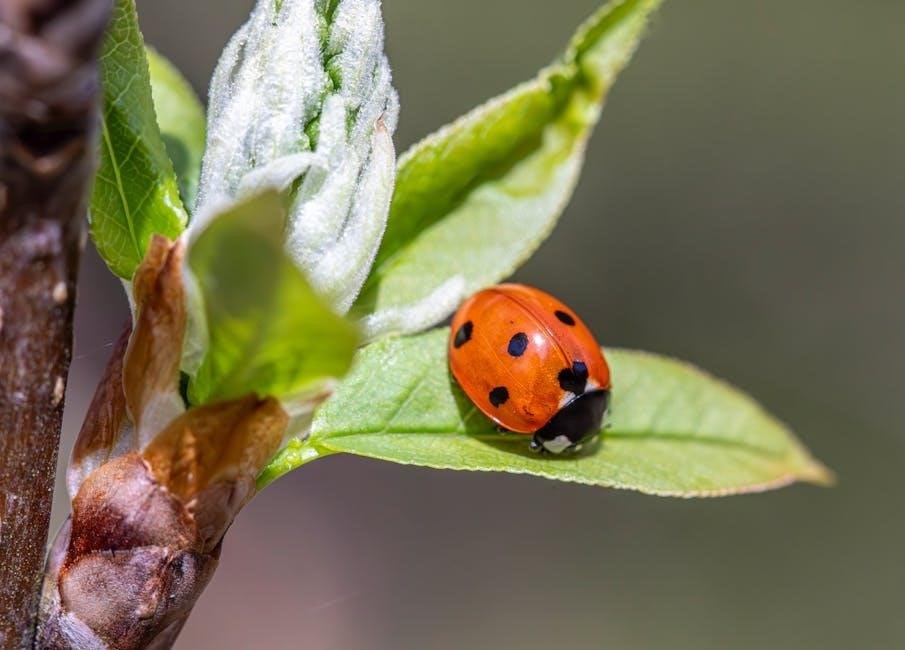
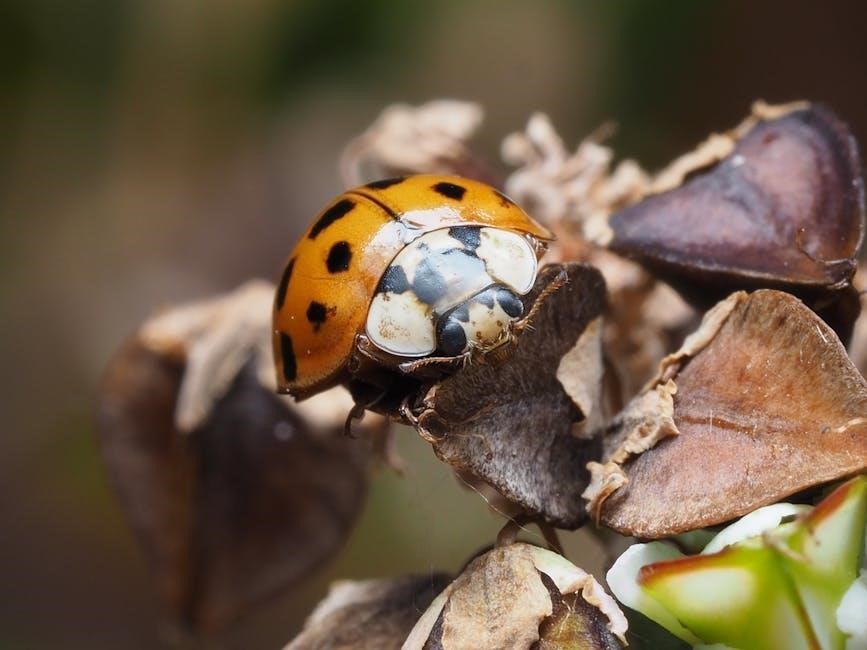
Not all insect eggs signify a threat to your garden or home; many belong to beneficial insects. Learning to differentiate between pest and beneficial eggs is vital for integrated pest management. Ladybugs, lacewings, and parasitic wasps lay eggs often near or on pest insects, offering natural control. Ladybug eggs are typically small, oval, and yellow, found near aphid colonies.
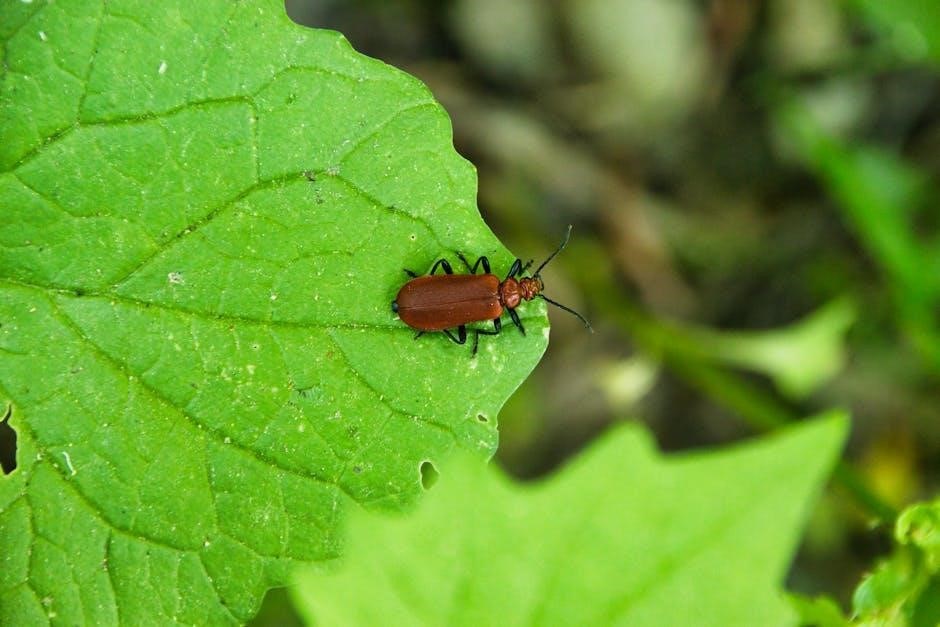
Lacewing eggs are stalked, resembling tiny upright bottles, often deposited amongst foliage. Pest eggs, conversely, may be laid in masses or specific patterns indicative of the species. Recognizing the host plant preference can also help; butterfly eggs are usually found on their specific host plants. Avoid indiscriminately destroying all eggs; careful identification prevents eliminating beneficial allies; Researching common beneficial insects in your region will enhance your ability to protect these valuable garden helpers.
Specific Pest Insect Egg Identification
Targeted identification of pest eggs allows for swift action. Knowing the unique characteristics of eggs from Japanese beetles, lanternflies, and stink bugs is key.
Japanese Beetle Eggs: Identifying in Lawns
Japanese beetle eggs are typically found within the turfgrass of lawns, presenting a challenge for homeowners. These small, creamy-white eggs are approximately 1/16 inch in size, resembling tiny pearls. They are usually laid in clusters, often containing between 15 and 60 eggs, within the soil. The eggs are initially laid singly, but females will return to the same spot to deposit more, forming these characteristic groupings.
Look for these eggs during late spring to early summer, as this is the primary egg-laying period for Japanese beetles. The grubs hatch from these eggs within 10 to 14 days, beginning their destructive feeding on grass roots. Careful inspection of turf, particularly in areas showing signs of damage, is crucial for early detection. Lifting sections of turf can reveal the presence of these eggs. Identifying them promptly allows for timely intervention to control the grub population before significant lawn damage occurs.
Spotted Lanternfly Eggs: Mud-Like Appearance
Spotted lanternfly eggs are notoriously difficult to spot due to their unique, camouflaged appearance. Laid in masses, they resemble patches of dried mud or smeared putty on surfaces like trees, rocks, outdoor furniture, and even vehicles. These masses typically consist of 30-50 eggs, covered in a grayish-brown, waxy coating.
Freshly laid egg masses have a glossy sheen, which fades as they age. They are often found on the bark of trees, particularly those favored by the lanternfly, such as maple and walnut. The egg masses are approximately one inch long and half an inch wide. Careful observation is key, as they blend seamlessly with their surroundings. Scraping off and destroying these egg masses during the late fall and winter months is a crucial step in controlling the spread of this invasive pest, preventing future infestations.
Stink Bug Eggs: Barrel-Shaped & Grouped
Stink bug eggs are readily identifiable by their distinctive shape and clustered arrangement. These eggs are small, oval, and barrel-shaped, typically pale yellow or greenish-white in color. They are usually laid in neat rows or masses on the undersides of leaves, stems, or other plant parts. A single female can deposit hundreds of eggs throughout her lifespan, often in multiple clusters.
Each egg is approximately 1mm in length and firmly attached to the plant surface. The clusters are often found on host plants like beans, tomatoes, and peppers, but can also be laid on other vegetation. Upon hatching, the nymphs resemble miniature versions of the adults, though lacking fully developed wings. Early detection and removal of stink bug egg masses can significantly reduce populations and minimize damage to crops and gardens. Look closely for these telltale signs during spring and summer.
Resources for Further Identification
Expand your knowledge with online guides and local experts! Agricultural extension services offer tailored assistance, while websites provide detailed images and descriptions;
Online Insect Identification Guides
Numerous websites specialize in insect identification, offering valuable resources for pinpointing egg types. University extension programs frequently host comprehensive online databases with high-resolution images and detailed descriptions of insect eggs, categorized by pest status and host plant. BugGuide.net is a popular platform, driven by citizen science, allowing users to upload photos and receive identification assistance from experienced entomologists.
Additionally, many state departments of agriculture maintain online resources dedicated to identifying common pests within their region, including their egg stages. These guides often include information on life cycles, damage symptoms, and recommended control measures. When utilizing online resources, it’s crucial to verify the source’s credibility and cross-reference information from multiple sites to ensure accuracy. Look for websites affiliated with universities, government agencies, or reputable entomological societies. Remember to consider geographical location, as insect distributions vary.
Local Agricultural Extension Services
Your local agricultural extension office represents an invaluable, often underutilized, resource for insect egg identification. These offices, typically associated with land-grant universities, employ trained entomologists and horticulturalists who can provide expert assistance tailored to your specific region and local pest pressures. They frequently offer free or low-cost diagnostic services, including egg identification from submitted samples.
Beyond identification, extension services provide practical advice on pest management strategies, including integrated pest management (IPM) techniques. They can help you determine if an egg mass represents a significant threat and recommend appropriate control measures, prioritizing environmentally sound approaches. Many offices host workshops and field days focused on pest identification and management. Finding your local extension office is usually as simple as a quick online search using your county and state, or visiting the USDA’s National Institute of Food and Agriculture website. Don’t hesitate to reach out – their expertise is readily available!
Related Posts

paradise parents guide
Paradise Parents Guide: Planning Your Family Getaway Planning a family…

fairtex shin guard size guide
Fairtex Shin Guard Size Guide: A Comprehensive Overview (Updated 02/05/2026)…

darksiders genesis trophy guide
Darksiders Genesis Trophy Guide: An Overview Darksiders Genesis presents a…